
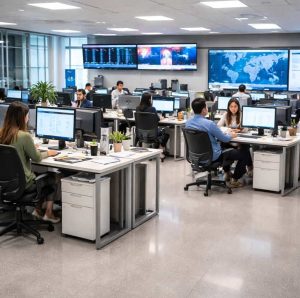
 Newsrooms move fast. Phones ring. Alerts pop up. Reporters rush in and out. Producers scan scripts while editors juggle deadlines. In that kind of environment, it’s easy to overlook something basic: the floor. But clean floors matter more than most people think, and regular tile and grout cleaning helps ensure they support how a newsroom functions, how people feel at work, and how the organization is perceived by visitors and viewers. And in modern media spaces, where transparency and credibility are under constant scrutiny, details count.
First Impressions Still Matter
Even in a digital age, newsrooms receive guests. Sources come in for interviews. Executives walk through. Sometimes, community members or students visit. And in broadcast settings, parts of the newsroom may be visible on camera.
A scuffed, stained, or cluttered floor sends a message. It suggests neglect. It hints at disorganization. That may not reflect the quality of the journalism, but perception is powerful.
Clean floors, on the other hand, signal order. They show care. They tell visitors that this is a professional environment where standards matter. When trust in media is fragile, every visible detail supports or weakens credibility.
Safety Is Not Optional
Modern newsrooms are packed with equipment. Camera cables. Lighting stands. Rolling chairs. Computer stations. Add coffee cups and stacks of paper, and you have real risk. Dirty or poorly maintained floors increase the chance of accidents. Spills can make surfaces slippery. Dust and debris can hide small obstacles. Loose mats can shift underfoot.
A fall in a newsroom is more than an inconvenience. It can mean injury, lost work time, and liability issues. And in a 24-hour news cycle, losing even one key staff member during a major story can disrupt coverage. Regular cleaning and proper maintenance reduce those risks. Floors should be inspected. Spills should be handled quickly. High-traffic areas need more frequent attention. These are basic practices, but they protect both people and operations.
Health and Air Quality
Newsrooms are often open-plan. Dozens, sometimes hundreds, of people share the same air. Dust and dirt on floors don’t just stay there. They get stirred up by foot traffic and circulate through the space.
Over time, that affects air quality. Allergies flare up. Respiratory issues worsen. Even people without diagnosed conditions may feel its impact in subtle ways, such as fatigue or headaches.
In high-pressure jobs, small physical discomforts add up. Reporters already work long hours. Editors sit for extended stretches. Producers manage constant stress. The workplace should not add another layer of strain. Clean floors help reduce dust and allergens. They contribute to a healthier environment. And healthier employees are more focused, more productive, and less likely to take sick days.
Focus and Mental Clarity
Physical space influences mental space. Cluttered, dirty environments create visual noise. They distract. They signal chaos. Journalism requires concentration. Reporters verify facts. Editors scan for errors. Producers track timelines down to the minute. When the surrounding environment feels orderly, it supports that mental discipline.
This is not about perfection. Newsrooms are busy by nature. Papers will stack up. People will move quickly. But there is a difference between active and messy. Clean floors create a sense of structure, even when the pace is intense. And that structure matters. It tells staff that the organization values standards over speed.
Technology and Infrastructure
Modern newsrooms rely on technology. Servers, editing stations, broadcasting equipment, and charging hubs are often located near the floor. Dust and dirt can damage equipment over time. Fine particles accumulate in vents and around cables. Moisture from spills can seep into power strips or under desks. Even something as simple as tracked-in debris can affect rolling chairs and cable management systems.
Maintenance teams understand this connection. Regular floor care is not cosmetic. It protects infrastructure. It reduces wear on equipment. And it reduces the risk of technical failures during critical moments, such as live broadcasts or breaking news updates. In short, clean floors support operational reliability.
Culture and Accountability
Workplace standards reflect workplace culture. If leadership tolerates visible neglect, employees notice. It shapes how seriously they take other expectations. A newsroom that maintains its physical space sends a quiet message: details matter here. That mindset carries over into reporting and editing. Accuracy. Fairness. Clarity. All require attention to detail.
This does not mean journalists should mop floors between deadlines. It means organizations should invest in proper facilities management and set clear expectations for shared spaces. Simple habits help. Encouraging staff to report spills. Keeping walkways clear. Scheduling regular deep cleans. These practices reinforce a culture of responsibility.
Hybrid Work and Shared Spaces
Many newsrooms now operate on hybrid schedules. Fewer people may be in the office at one time, but shared desks and flexible seating are more common. That creates a new challenge. When no one “owns” a space, it can become easier to ignore maintenance issues. Dirt builds up quietly. Small problems go unaddressed.
Clean floors become part of making shared spaces work. When employees rotate through the office, they should feel that the environment is cared for. It helps them settle in quickly and focus on their tasks.
In a hybrid model, the physical newsroom has to justify its value. It needs to feel functional, welcoming, and professional. Cleanliness is part of that equation.
On-Camera Reality
For broadcast and digital video teams, floors are sometimes visible to the audience. Wide shots may capture background activity. Reflective surfaces can reveal more than expected. A dirty floor can distract viewers. It can pull attention away from the story. In high-definition broadcasts, small imperfections stand out more than ever. Maintaining floors is part of production quality. Just like lighting and sound checks, it supports the final product.
A Practical Investment
Cleaning budgets are often easy targets during cost-cutting. They seem less essential than hiring reporters or upgrading software. But the cost of neglect can be higher. Injuries. Equipment damage. Lower morale. Poor first impressions. Each of these carries financial and reputational consequences.
Professional floor care is not a luxury. It is a practical investment in safety, health, and performance.
Modern newsrooms operate under intense pressure. They face public scrutiny and competition from every direction. They cannot control every external challenge. But they can control their environment.
Clean floors will not solve editorial debates or revenue struggles. Still, they create a foundation for better work. They reduce risk. They support focus. They reinforce standards. And in journalism, standards are everything.